"Faith is ... the certainty of things not seen" (Hebrews 11:1)
livingwithfaith.org
  • ARTICLES
  • E-BOOKS
  • AUDIO-BOOKS
  • PODCASTS
  • BLOG

Stand Firm

10/1/2024

 
Picture
People who study the apostle Paul’s armor of God passage most often focus on the pieces of that spiritual armor: the belt of truth, breastplate of righteousness, shield of faith, etc. However, I ask you to consider the reason Paul gives for putting on that armor of God. In Ephesians 6:11, Paul writes: “Put on the full armor of God, so that you will be able to stand firm against the schemes of the devil” (emphasis mine). Verse 13 continues that theme: “take up the full armor of God, so that you will be able to resist in the evil day, and having done everything, to stand firm.” And then verse 14 begins, “Stand firm.”

 Are you picking up a pattern? “Stand firm” is not limited to Ephesians 6. Paul encourages the Galatians to stand firm (5:1), as well as the Philippians (4:1) and the Thessalonians (2 Thessalonians 2:15). James also encourages believers to stand firm (5:8), as does Peter (1 Peter 5:9). Standing firm spiritually is a major theme of the apostles’ teaching.

My favorite “stand firm” passage is 1 Corinthians 16:13: “Be on your guard; stand firm in the faith; be courageous; be strong.” This verse consists of four terse commands, each closely related to the others.

Command 1: Be on your guard. In Greek, this command is expressed in one word: gregoreo. In its secular usage, this was a military term meaning “Be alert! Be vigilant!” Paul borrows this command from the military and applies it to our spiritual warfare against the lies and enticements of the world, the flesh, and the devil. “Watch out!” he commands throughout his inspired writings. Watch out for false teachers and false gospels. Watch out for temptations to stray from focusing on Jesus. Be on your guard!

Command 2: Stand firm in the faith. Paul uses “the faith” here exactly as Jude uses it in Jude 3: “Dear friends, although I was very eager to write to you about the salvation we share, I felt compelled to write and urge you to contend for the faith that was once for all entrusted to God’s holy people.” In other words, the faith in which we are to stand firm is the good news about Jesus, that Jesus himself preached: In Jesus, the kingdom of God has come.

Command 3: Be courageous. As in Command 1, this term in the Greek is one word: andrizomai. A more accurate translation might be “Act like men!” Courage is part of that, but the emphasis seems to be upon maturity. “Exercise a mature-in-the-faith courage!” is Paul’s command. Maturity in the faith is a theme throughout 1 Corinthians. In 14:20, Paul has just pleaded with these believers “do not be children in your thinking . . . but in your thinking be mature” (NASB). To stand firm in the faith, one must be mature in the faith.

Command 4: Be strong. A bit more Greek? This command is a verb in the passive voice. Passive verbs receive rather than perform action. A better translation than “Be strong!” is “Be strengthened!” The spiritual strength we need to stand firm in the faith is not something we can create ourselves. It is something God creates within us as we submit to Him in Christ. Be strengthened!

Four spiritual imperatives: Stay alert! Stand firm! Behave mature! Be strong with God-given strength! That’s a recipe for Christian faithfulness.


By Loren Stacy – Reprinted with permission from The Bible Advocate July-August, 2021.

What Was Paul’s “Thorn in the Flesh”?

1/15/2024

 
Picture
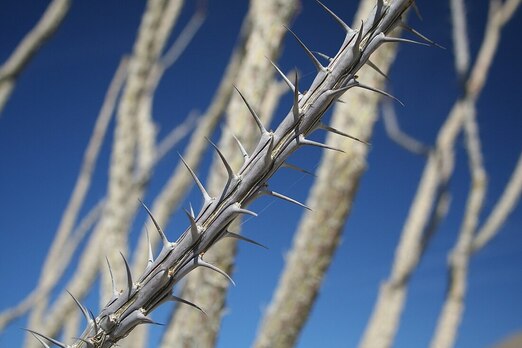
​In his second letter to the Corinthians, the apostle Paul wrote of the revelations that had been given to him, then tells us “in order to keep me from becoming conceited, I was given a thorn in my flesh, a messenger of Satan, to torment me. Three times I pleaded with the Lord to take it away from me. But he said to me, ‘My grace is sufficient for you, for my power is made perfect in weakness’” (2 Corinthians 12:7-9).

The identity of the “thorn” in Paul’s flesh has often been debated, and there are several possibilities regarding its nature. The most commonly accepted interpretation is that the thorn Paul suffered was some kind of physical weakness or “infirmity.”  Supporters of this view often point out that Paul mentions the large letters he used in writing to the Galatians (Galatians 6:11), and  he also mentions that the Galatians would have plucked out their own eyes and given them to him (Galatians 4:13-15) – both of which might indicate an ongoing physical eye problem.

But Paul also says in verse 13 of Galatians 4 that his weakness was “at first” – which gives the impression that it was a temporary thing from which he recovered (very possibly the stoning Paul suffered in Galatia that he describes in the same chapter ). Additionally, weakness or infirmity need not mean a physical ailment in 2 Corinthians 12:9–10.  In 2 Corinthians 11:30, Paul uses the same terminology of “glorying in weakness” that he uses a few verses later in speaking about the thorn he was given. In fact, in the earlier chapter Paul lists a number of “weaknesses” he had suffered – such as imprisonment, whippings, shipwrecks, and stonings – but does not mention any specific physical ailment (2 Corinthians 11:23–29).

So, many scholars prefer to look for another explanation of Paul’s thorn in the flesh.  All of the things listed in 2 Corinthians 11 as weaknesses or infirmities are forms of persecution and, in context, Paul’s thorn could have been ongoing persecution that was stirred up against him and which prevented him from fully doing the work he wished to do.  In fact, the description of persecution as a “thorn” is found several times in the Old Testament.  In Numbers 33:55; Joshua 23:13; and Judges 2:3, enemies of Israel are spoken of as being “thorns in your sides” and “thorns in your eyes.”

In Paul’s case, the apostle elsewhere mentioned Alexander the coppersmith (2 Timothy 4:14), Hymenaeus, and Philetus (2 Timothy 2:17), and others as persecuting him and hindering his work, so he may have had people like them in mind as being “thorns” to him and adversaries of the gospel. 

Understood this way, Paul asked God to remove ongoing persecution from him, not sickness, and was told that God’s grace or help is with us in those situations – that we are sometimes not redeemed from persecution, just as Paul himself stated when he later wrote, “everyone who wants to live a godly life in Christ Jesus will be persecuted” (2 Timothy 3:12).
​
But the Bible does not precisely identify Paul’s thorn in the flesh. Many commentators simply gloss over this fact by saying the nature of Paul’s thorn does not matter or God would have recorded it so we would know what it was. But there is a far simpler and more likely understanding of Paul’s failure to identify what troubled him. Paul may have been intentionally vague because God inspired him not to directly identify his thorn so that  people with various physical and spiritual problems could  identify with Paul and understand his point in mentioning his suffering – that we can all experience the same grace that Paul did, because Christ’s power “is made perfect in weakness” (2 Corinthians 12:9) – whatever our weakness or infirmity might be.


Why Faith Needs Patience

3/5/2021

 
Picture
​“… we ourselves boast of you among the churches of God for your patience and faith in all your persecutions and tribulations that you endure” (2 Thessalonians 1:4 NKJV).

The Bible often speaks of faith and patience in combination – prompting us to ask, “Can we have true faith without patience – or even true patience without faith?” The answer to these questions is found in understanding the relationship between the two qualities. 

Every Christian knows the importance of faith, hope and love (1 Corinthians 13:13), but sometimes we need to be reminded that these things are completely interrelated rather than existing in isolation.  It is sometimes hard to see this, because different terms are often used, so we don’t always see the connection.  An example is the way in which faith and patience interact. Biblically, patience is a form of hope.  We see this fact in many scriptures:   “But if we hope for what we do not yet have, we wait for it patiently” (Romans 8:25); “We remember … your work produced by faith, your labor prompted by love, and your endurance [patience] inspired by hope …” (1 Thessalonians 1:3).  

But patience can mean different things in the Bible. For example, the Greek word makrothumia, often translated “longsuffering,” relates to patience with people, whereas the word upomone is generally patience with regard to things or circumstances.  It is this patience with the circumstances and conditions in which we find ourselves that ties into faith – supporting it and being supported by it.

Notice how the two qualities of faith and patience interact. Paul tells us:  “… we also glory in our sufferings, because we know that suffering produces perseverance [patience]” (Romans 5:3).  James tells us “ … count it all joy when you fall into various trials, knowing that the testing of your faith produces patience” (James 1:2-3 NKJV),  and Peter elaborates: “In all this you greatly rejoice, though now for a little while you may have had to suffer grief in all kinds of trials.  These have come so that … your faith ... may result in praise, glory and honor when Jesus Christ is revealed” (1 Peter 1:6-7).  

These scriptures, and many others, show us that two things occur when we suffer as Christians. On the one hand, the sufferings refine our faith making it better, stronger (mentioned by Peter). Sufferings also produce patience in us (mentioned by James and Paul).  The two qualities are both needed to withstand problems.  Faith without patience produces Christians who may start off well, but who eventually falter in their faith and fall away or burn out. On the other hand, patience without faith produces individuals who experience suffering but do not profit from it in the way God intends. 

It is to the degree that we employ both patience and faith in our suffering that we are strengthened and endure, and it is that endurance which is ultimately necessary to succeed in the Christian life (Matthew 10:22; Matthew 24:13). Simply put, patience needs faith and faith needs patience.  As the Book of Hebrews confirms, we need both qualities in our lives if we are to: “Imitate those who through faith and patience inherit what has been promised” (Hebrews 6:12).

Giving Thanks for Asia Bibi's Freedom

1/30/2019

 
Picture
After more than nine years imprisonment – on death row for most of that time – Asia (pronounced “ahseeya”) Bibi, the young Pakistani Christian woman who was charged with violating Pakistan’s anti-blasphemy laws, has been freed.   

Pakistan's Supreme Court finally ruled that Bibi had been falsely accused and that she was to be freed in October of 2018, but widespread and often violent reaction among the country’s Muslim population led to the Christian not being allowed to leave the country and the court’s decision being legally challenged.

Thankfully, and despite great domestic pressure, the Supreme Court upheld its decision confirming Asia Bibi’s freedom and allowing her to leave the country – and potentially to travel to Canada where her children have already been relocated.   

The harrowing years of legal turmoil and possible execution for the young Christian field laborer and mother of five began in 2009 when Muslim co-workers who had sent her to bring water to them were upset that she drank some water from the same source, claiming that as a non-Muslim she had defiled it.  When an argument erupted, the Muslim co-workers brought charges against Bibi of blaspheming the prophet Mohamad – using a notorious law that is often brought against non-Muslims.

In its 56-page ruling, however, Pakistan's highest court found the accusation to be false saying “She appears to be a person, in the words of Shakespeare's King Lear, 'more sinned against than sinning.'”  Pakistan’s Chief Justice, Asif Saeed Khan Khosa, went as far as to say that Bibi’s accusers were guilty of perjury and if the case hadn’t been so sensitive, they would themselves have been jailed for life. Bibi’s lawyer, Saiful Malook, who had to flee the country due to death threats, said the decision was a victory for Pakistan’s constitution and rule of law.

However, as Amnesty International has announced: “After nine years behind bars for a crime she didn’t commit, it is difficult to see this long overdue verdict as justice. But she should now be free to reunite with her family and seek safety in a country of her choice.”

Asia Bibi remained hidden under government protection after the Supreme Court upheld her release this week, but after being transferred to the capital Islamabad yesterday, Bibi was expected to leave the country as soon as possible for Canada where she has now been offered asylum. News sources quote a close friend as saying Bibi is overjoyed at her freedom and had said: "I am really grateful to everybody, now after nine years it is confirmed that I am free, and I will be going to hug my daughters.” 

Bibi’s faith appears to have remained strong throughout her ordeal and in the 2012 book, Get Me Out of Here, that Bibi was helped to write, she included a letter to her family urging them not to “lose courage or faith in Jesus Christ.”

We can and should be grateful for this resolution of Asia Bibi’s situation, but this young Christian field worker’s case well illustrates the plight of many Christians in Pakistan who are, like Bibi herself, often poor, illiterate, and without connections – making them easy targets for religious persecution.   The anti-Christian forces within Pakistani society may now turn on Christians who remain in the country, and even more of the ongoing persecution is likely. Some 187 other Pakistani Christians remain in prison on  the same charge of blasphemy.  
​
So, although the prayers of those who have faithfully remembered Asia Bibi over the last several years have finally been answered, now is no time to let down.  We can and should give thanks for this young woman’s release, but we should also continue to remember the many Christians in Pakistan who still need our concern. 

* Update: Asia Bibi arrived in Toronto on Tuesday, February 5th, and has now been reunited with her family in Canada. 

Prayer for the Persecuted Church

11/9/2016

 
Picture
November is the month in which a day is set aside for IDOP – the International Day of Prayer for the Persecuted Church.   This year, however, circumstances have led to three different days being marked for this purpose.
 
Some groups will observe November 20 as IDOP this year, but as this day falls somewhat close to the American Thanksgiving holiday, at least one group has opted for November 13, and the major Christian relief organization Open Doors has set November 6 – the first Sunday in the month – as the Day of Prayer.

Whichever day – or days – we may focus on the needs of our persecuted brothers and sisters around the world, the need has never been greater.   In many countries in Africa and Asia, especially, millions of Christians endure continued restrictions, harassment and humiliation for their faith.   They, sadly, are the fortunate ones.   Millions more believers face ongoing violence with beatings, torture, and murder occurring on a daily basis at the hands of terrorist groups such as ISIS and Boko Haram, but also from mainstream followers of many non-Christian religions.  Many people cannot meet or worship freely and many live their lives in constant danger and deprivation because of their faithfulness. These are the reasons why persecuted Christians deserve and need our prayers daily, and why the International Day of Prayer for the Persecuted Church focusses on the situation in a united manner.
 
If you are not familiar with the levels of persecution that are extant in the world at the present time or want to understand more about the situation, we recommend Open Doors’ World Watch List as a good place to start.  This excellent list shows the extent of the problem and provides opportunities to learn more.  The website also shows other ways we can help.
 
Once we understand the magnitude of the situation, we are better equipped to pray in a more meaningful way for those who need help.  As the Apostle Paul wrote in 1 Corinthians 12:26, when one part of the Body of Christ – the Church – suffers, all parts suffer.  These are not pleasant things to contemplate or to concentrate on, but if we are not suffering in our hearts and minds for our persecuted brothers and sisters (Romans 12:15), we must ask ourselves to what degree are we really part of that Body.   Remembering the persecuted Church can help those in need in immeasurable, but very real, ways.

Why We Need to Pray for Asia Bibi Now!

3/23/2016

 
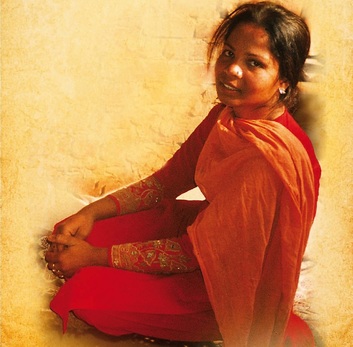
PictureAsia Bibi. Image: British Pakistani Association

​This Saturday, March 26, an appeals court in Pakistan will review the case of Aasiya Noreen, or Asia Bibi as she is better known, an illiterate young Pakistani Christian who was convicted of blasphemy and sentenced to death by hanging in November 2010.

Local women became angry with Asia when she drank from the same water source they were using.  After subsequent arguments, she was charged under Pakistan’s strict blasphemy law for insulting the prophet Muhammad – a charge she categorically denies.  For the past five years Asia has been imprisoned and separated from her husband and children (who have had to go into hiding) while she awaits execution. Threats against her life have continued in prison, and she was moved to solitary confinement in a small windowless cell where she cooks her own food in order to protect her from other inmates and from attempts to poison her. She has reportedly been abused by the guards in the prison where she is being held and her health is now very frail.

The Pakistani Christian minorities minister, Shahbaz Bhatti, and another politician, Salmaan Taseer, who argued for Noreen’s release, were both assassinated for advocating on her behalf.  In October 2014 the Pakistani court system dismissed Asia's appeal and upheld her death sentence. The following month, her lawyer appealed to the Supreme Court of Pakistan which suspended Bibi's death sentence for the duration of the appeals process.  After several postponements the Lahore High Court will hear her appeal this week – on March 26.

We should join Christians around the world in praying for the release of Asia Bibi. Pope Benedict XVI and other leaders have publicly called for the charges against her to be dismissed, and many Christian organizations are trying to mobilize believers to help her.  The Voice of the Martyrs organization has organized a petition that can be signed online and hopes to gather one million signatures on behalf of our sister Asia.  At the time of writing, 697,586 people have signed the petition and you can sign it here. 

Given the Pakistani Supreme Court hearings scheduled for this weekend, we should pray earnestly for Asia Bibi this week.  Pray not only for Asia as an individual (who was condemned not for taking a cup of water but for her Christian beliefs), but also for all who are similarly afflicted by Pakistan’s harsh Islamic blasphemy laws.  Because this is a high profile case, if the court rules in her favor, it could be an important precedent for other Christians unjustly threatened by the same blasphemy laws now and in the future.

There are other things we can do. In the United States we can contact our Congressional representatives to protest America's eight billion dollar yearly aid to Pakistan and to argue that that aid should be stopped as long as persecution of minorities is allowed in that country.
​
But most of all, Asia Bibi needs our prayers – and she needs them now.

To Flee or Not to Flee

12/10/2015

 
Picture
“The prudent see danger and take refuge, but the simple keep going and pay the penalty.” (Proverbs 27:12)

I recently read a disturbing article in a Christian publication that stated that those undergoing persecution in areas where they and their families were no longer safe should not attempt to flee, but that they should have faith and should stay where they are in order to be a light to those around them, including their persecutors.

Although I’m sure the writer was well meaning, I think it is important that persecuted Christians understand  there is nothing biblically wrong with fleeing to protect oneself and one’s family rather than staying in the proverbial “frying pan.”  In fact, whenever it has been possible, it is “fleeing,” not “frying,” that has characterized Christianity throughout its history.

We have only to look at the biblical record to see the example of countless men and women of God who fled persecution.  Moses fled Egypt before later returning (Exodus 2:15).  Elijah fled from Jezebel before it was his time to return (1 Kings 19:3).  Jeremiah urged the people of Jerusalem to flee before the city was attacked by its enemies (Jeremiah 6:1).  The family of Christ was commanded to flee with the infant Jesus (Matthew 2:13), and Jesus, of course, told his followers not that they should not flee, but that they should pray that their flight be not at a dangerous and inopportune time (Matthew 24:20). It is historically clear that when Jerusalem was destroyed by the Romans in AD 70, with a great loss of Jewish life, few if any Christians died in the siege of the city, as they had followed the teaching of their master – and fled.

We see this pattern of fleeing persecution in the New Testament itself.  The Book of Acts shows that when Stephen, the first Christian martyr, was killed: “On that day a great persecution broke out against the church in Jerusalem, and all except the apostles were scattered throughout Judea and Samaria” (Acts 8:1).  The result of this fleeing was not some kind of spiritual decline of the Church, rather: “Those who had been scattered preached the word wherever they went” (vs. 4), and Christianity both spread and increased as a result.
Even the leaders of the early Church who stayed originally in Jerusalem thought it wise to flee when circumstances indicated they should. We see that the apostle Peter fled when his life was threatened (Acts 12:17), and the apostle Paul fled on numerous occasions to avoid persecution and threats to his life (Acts 14:6, etc.). 

So the Bible does not teach that we should feel it is a matter of faith not to flee when every indication is that it would be wise to do so.  Certainly, there are cases where God has called individuals to stay and face persecution, but without a clear call to do so, God expects us to use wisdom in all things (Ecclesiastes 7:12) and to avoid threats that are avoidable (Proverbs 22:3 and Proverbs 27:12).

The answer to most life-threatening persecution is not to stay, but to have the kind of faith that trusts God enough to flee and receive his guidance and help to reach a place of safety. The Church has always fled when appropriate, and always will (Revelation 12:6). To suggest otherwise is to not understand the example of the Bible itself. 

Words for a Time of Persecution

11/1/2015

 
Picture

Today is the first of three days in the month of November set aside as International Days of Prayer for the Persecuted Church. For those who may not have seen it, we reproduce the following article (published August, 9, 2015) updated from our sister site TacticalChristianity.org .

“… persecuted, but not forsaken; struck down, but not destroyed” ​(2 Corinthians 4:9).

The apostle Paul knew a few things about being persecuted for one’s faith.   After turning from his role as persecutor of the Church, Paul was himself frequently attacked and assaulted for his beliefs and teaching.   The harassment was not just verbal. The apostle tells us he was physically beaten numerous times and that “Five times I received from the Jews thirty-nine lashes” (2 Timothy 2:9). He was even, on one occasion, stoned and then dragged away and left for dead (Acts 14:19).

It was not only the leaders of the early Church who underwent persecution, of course.  In his epistles to the Thessalonians, Paul provides an example of a whole congregation that was experiencing  persecution:  “… you became imitators of us and of the Lord, for you received the word in much affliction, with the joy of the Holy Spirit” (1 Thessalonians 1:6 ESV). “This is evidence of the righteous judgment of God, that you may be considered worthy of the kingdom of God, for which you are also suffering” (2 Thessalonians 1:5 ESV).  We don’t know all the details of how the Thessalonian Christians were being treated by those around them, but it is clear that they were facing discomfort and persecution.  

But Paul doesn’t just commend  these people as an example of those who are persecuted for their faith; he helps them realize where much of the spirit of persecution comes from, and he also offers them hope.  Notice what he told them: “But the Lord is faithful, and he will strengthen you and protect you from the evil one” (2 Thessalonians 3:3 NIV).  In saying this, Paul foreshadows God’s help to persecuted Christians through the ages – stressing the fact that God either strengthens or protects his people, depending on his will, and sometimes he does both. Paul found this frequently. Sometimes he was rescued (2 Timothy 3:11) and sometimes he was not (2 Timothy 2:9, 2 Timothy 4:6-8).  

We have only to look around the world today to see that many – possibly the majority of – Christians are still living in some degree of discomfort in terms of societal or official pressure and persecution. Many are suffering intense persecution, and God still protects his people or strengthens them to endure. But why do some suffer and some escape? The testimony of history and current events both show that God works despite the persecution of his followers. It is in times and places of persecution that Christianity grows the most – both numerically and spiritually.  Not only does persecution and societal lack of approval help believers grow closer to God, but also it often gives them unique opportunities to be a better light to others. 

It is no coincidence that Paul told the Thessalonians that they were a  model to all the believers in the surrounding areas (1 Thessalonians 1:7-8).  The persecuted Thessalonians were, he tells us, especially effective in spreading the gospel  throughout their surrounding region (vs. 8) through their “work produced by faith,” their “labor prompted by love,” and their “endurance inspired by hope …” (vs.3). As a result, the Thessalonian Christians were both a powerful witness to other believers and to those outside the Faith.

Paradoxical as it may seem, Paul  reminds us that the more uncomfortable it becomes to be a Christian, the more Christian committed Christians become. ​Nevertheless, the persecuted need our prayers. Pray for the persecuted Church! 

*For more information on this topic we recommend Jonathan Petersen's excellent article on the BibleGateway.org site here. 

    BLOG

    Follow @livingbelief

    RSS Feed

    For a smart browser-bookmark showing new blog postings, click on the RSS Feed icon.  

    Author :

    Unless otherwise stated, blog posts are written by R. Herbert, Ph.D.,  who writes for a number of Christian venues – including our sister site: TacticalChristianity.org
    ​
    For more about us, see our About Page.

    Categories :

    All
    Behind The Stories
    Bible Study
    Biblical Concepts
    Books Of The Bible
    Christianity-culture
    Christian Living
    Dealing With Doubt
    Discipleship
    Encouragement
    Faith Hall Of Fame
    Faith & Trust
    Faith & Works
    Family
    Fellowship
    Forgiveness
    Giving
    God
    Gratitude
    History & The Bible
    Hope
    Knowledge & Wisdom
    Love
    Persecution
    Prayer
    Relationships
    Salvation
    Scripture In Question
    Spiritual Growth
    Suffering
    The Christian Calling
    The Christian Faith
    The Life Of Jesus
    Truth
    Works Of Faith

    Archives :

    October 2025
    September 2025
    August 2025
    July 2025
    June 2025
    May 2025
    April 2025
    March 2025
    February 2025
    January 2025
    December 2024
    November 2024
    October 2024
    September 2024
    August 2024
    July 2024
    June 2024
    May 2024
    April 2024
    March 2024
    February 2024
    January 2024
    December 2023
    November 2023
    October 2023
    September 2023
    August 2023
    July 2023
    June 2023
    May 2023
    April 2023
    March 2023
    February 2023
    January 2023
    December 2022
    November 2022
    October 2022
    September 2022
    August 2022
    July 2022
    June 2022
    May 2022
    April 2022
    March 2022
    February 2022
    January 2022
    December 2021
    November 2021
    October 2021
    September 2021
    August 2021
    July 2021
    June 2021
    May 2021
    April 2021
    March 2021
    February 2021
    January 2021
    December 2020
    November 2020
    October 2020
    September 2020
    August 2020
    July 2020
    June 2020
    May 2020
    April 2020
    March 2020
    February 2020
    January 2020
    December 2019
    November 2019
    October 2019
    September 2019
    August 2019
    July 2019
    June 2019
    May 2019
    April 2019
    March 2019
    February 2019
    January 2019
    December 2018
    November 2018
    October 2018
    September 2018
    August 2018
    July 2018
    June 2018
    May 2018
    April 2018
    March 2018
    February 2018
    January 2018
    December 2017
    November 2017
    October 2017
    September 2017
    August 2017
    July 2017
    June 2017
    May 2017
    April 2017
    March 2017
    February 2017
    January 2017
    December 2016
    November 2016
    October 2016
    September 2016
    August 2016
    July 2016
    June 2016
    May 2016
    April 2016
    March 2016
    February 2016
    January 2016
    December 2015
    November 2015
    October 2015
    September 2015
    August 2015
    July 2015
    June 2015
    May 2015
    April 2015
    March 2015
    February 2015
    January 2015
    December 2014
    November 2014
    October 2014
    September 2014
    August 2014
    July 2014
    June 2014
    May 2014
    April 2014
    March 2014
    February 2014
    January 2014

    Community :

    Picture
    - Charter Member -
© 2014 – 2025 LivingWithFaith.org